
Vascular access is an important consideration in diagnostic and interventional cardiovascular procedures. While radial and femoral approaches are widely recognized, ulnar artery access can represent an alternative approach in selected clinical situations. Experiences involving this technique can provide valuable educational information when they demonstrate unusual anatomy, access challenges, procedural adaptations, or clinically relevant outcomes. Publishing Case Reports in Ulnar Artery Access Interventions allows clinicians and researchers to document these experiences for the wider cardiovascular community.
Bristol Publishers provides a platform for healthcare professionals who want to communicate meaningful cardiovascular observations through case-based academic publishing. A well-developed manuscript can describe the patient’s clinical presentation, vascular anatomy, procedural planning, intervention, challenges, and follow-up while emphasizing the educational value of the case.
Case Reports in Ulnar Artery Access Interventions
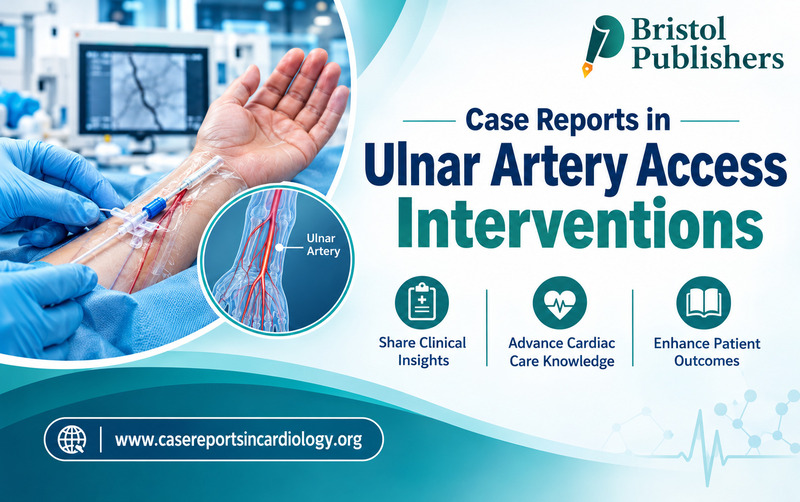
Ulnar artery access involves using the ulnar artery as an entry route for selected diagnostic or interventional procedures. The approach requires careful assessment of vascular anatomy and appropriate patient selection. Depending on the clinical circumstances, an alternative upper-limb access route may be considered when conventional access presents difficulties or when the treating team determines that another approach is appropriate.
Individual clinical experiences can vary because patients have different vascular anatomy, medical histories, vessel characteristics, and procedural requirements. These differences make detailed documentation particularly useful for medical education.
A case report can explain why a particular access strategy was considered, what clinical factors influenced the decision, how the procedure progressed, and what outcome followed.
Why Ulnar Access Experiences Are Worth Publishing
Clinical case reports provide an opportunity to document observations that may not be adequately represented in larger research studies. A specific patient may present an unusual vascular configuration, challenging access circumstances, or a procedural event that offers a useful learning opportunity.
Case Reports in Ulnar Artery Access Interventions can demonstrate how clinicians approach real-world procedural challenges while providing context around patient assessment and intervention planning. Rather than focusing solely on whether a procedure was successful, authors can describe the reasoning and circumstances behind important clinical decisions.
These publications may be particularly useful for professionals seeking practical examples of alternative vascular access and procedural management.
What Makes a Valuable Ulnar Artery Case?
A strong case report should have a clearly defined clinical or educational message. Authors should explain what makes the case relevant rather than simply describing a routine procedure.
Potentially valuable topics include unusual vascular anatomy, challenging access, difficult catheterization, alternative access after problems with another route, access-site complications, procedural adaptations, or distinctive clinical outcomes.
Case Reports in Ulnar Artery Access Interventions can also focus on diagnostic procedures, interventional cardiology, vascular interventions, or situations in which anatomical considerations played an important role in procedural planning.
The central message should remain focused throughout the manuscript so that readers can easily understand the significance of the reported experience.
Important Elements of a Case Report
Clinical Presentation
The manuscript should begin with relevant information about the patient’s presentation and clinical history. Authors should include details that help readers understand why the procedure was required and what factors influenced the clinical approach.
Vascular Assessment
Relevant vascular findings should be described clearly. Where appropriate, authors can explain anatomical characteristics, previous access history, or other considerations that influenced the selection of the ulnar artery.
Procedural Approach
The procedural section should provide an understandable account of the intervention. Authors can describe the important technical considerations, equipment or imaging used, challenges encountered, and strategies adopted during the procedure.
Follow-Up and Outcome
Follow-up information helps provide a complete clinical picture. Authors should report relevant outcomes, including procedural results and access-site observations when appropriate.
The Role of Imaging in Ulnar Access Publications
Medical imaging can substantially improve the educational value of vascular Case Reports in Ulnar Artery Access Interventions. Angiographic images and other relevant vascular imaging can demonstrate anatomy, procedural findings, and important clinical observations that may be difficult to communicate through text alone.
When including images, authors should provide concise captions and ensure that the images are sufficiently clear for readers. Any identifiable patient information should be appropriately removed or managed according to applicable ethical and publication requirements.
High-quality visual documentation can help readers understand the relationship between anatomy and procedural decision-making.
Clinical Lessons From Ulnar Artery Cases
One of the primary benefits of publishing a case report is the opportunity to communicate practical clinical lessons. An author may describe how an unexpected anatomical feature affected procedural planning or how a particular challenge was addressed during intervention.
These observations can encourage discussion among cardiovascular professionals and may identify areas requiring further research. However, individual case experiences should be presented within their appropriate context and should not be interpreted as definitive evidence for broader clinical practice.
A well-written discussion can compare the reported experience with existing literature and explain where the case adds a distinctive observation.
Ethical Considerations for Authors
Ethical reporting should be considered throughout the manuscript preparation process. Authors should protect patient confidentiality and follow relevant institutional and publication-specific requirements.
When patient images or potentially identifying clinical details are included, appropriate consent should be obtained when required. Identifying information should be removed or appropriately handled.
Authors should also ensure that clinical information is accurate and that claims are supported by appropriate evidence. References should be selected carefully to provide context and demonstrate how the case relates to existing knowledge.
Why Publish With Bristol Publishers?
Bristol Publishers supports clinicians, interventional cardiologists, vascular specialists, researchers, and healthcare professionals who want to communicate meaningful cardiovascular experiences through case-based publications.
Authors preparing Case Reports in Ulnar Artery Access Interventions can use a structured publication to document unusual access experiences, procedural challenges, clinical decision-making, and relevant outcomes. Presenting these observations in an organized format can make them more accessible to a wider professional audience.
Benefits of Publishing Your Case
- Share clinically relevant ulnar artery access experiences.
- Highlight unusual vascular anatomy and procedural challenges.
- Present important diagnostic and interventional observations.
- Document complications and management strategies.
- Provide educational material for cardiovascular professionals.
- Contribute case-based observations to medical literature.
Preparing Your Manuscript for Submission
Before submission, authors should review the applicable manuscript requirements and organize the case logically. The title and abstract should accurately describe the subject, while the main manuscript should provide relevant clinical information without unnecessary details.
Authors should check the quality of figures, tables, references, and supporting documentation. The discussion should clearly explain the educational significance of the case and relate the observations to existing medical literature.
A final review for grammar, formatting, consistency, patient confidentiality, and ethical documentation can help improve the overall presentation of the manuscript.
Share Your Ulnar Access Experience
Clinical experiences involving alternative vascular access can provide valuable opportunities for professional learning when they contain a meaningful observation. A carefully documented case can preserve important procedural knowledge and make it accessible to cardiovascular professionals and researchers.
If you have an unusual ulnar artery access experience, challenging intervention, distinctive vascular finding, or clinically relevant outcome, consider developing it into a structured manuscript. Bristol Publishers provides an opportunity to communicate valuable cardiovascular case-based research with a broader academic audience.
Prepare your clinical information carefully, highlight the key educational message, and submit your Case Reports in Ulnar Artery Access Interventions to Bristol Publishers for publication consideration.
Manuscript Submission
Authors are requested to submit their manuscript by using Online Manuscript Submission Portal: https://www.casereportsincardiology.org/case-reports-in-ulnar-artery-access-interventions.html
Frequently Asked Questions
Q. What are Case Reports in Ulnar Artery Access Interventions?
Case Reports in Ulnar Artery Access Interventions are clinical publications describing individual experiences involving ulnar artery vascular access, including relevant anatomical findings, procedural considerations, challenges, complications, and outcomes.
Q. Which ulnar artery cases may be suitable for publication?
Cases involving unusual anatomy, challenging access, procedural difficulties, complications, distinctive intervention strategies, or meaningful clinical outcomes may provide suitable material when they offer a clear educational message.
Q. Can imaging be included in an ulnar artery case report?
Yes. Relevant angiographic or vascular images can help demonstrate anatomy and procedural findings. Authors should ensure that images meet applicable quality, privacy, consent, and publication requirements.
Q. What should a case report include?
A typical case report may include the patient’s relevant history, clinical presentation, investigations, vascular findings, procedural approach, outcome, discussion, and references. Specific requirements depend on the publication.
Q. Why are ulnar artery case reports useful?
They provide detailed examples of real-world clinical experiences and can help readers understand alternative access considerations, procedural challenges, and clinical decision-making.
Q. Who can submit a case report?
Clinicians, interventional cardiologists, vascular specialists, researchers, and other healthcare professionals with a clinically meaningful case may prepare a manuscript, provided it meets applicable ethical and publication requirements.
Q. How can I publish my ulnar artery access case?
Authors can prepare their manuscript according to the relevant submission requirements and submit it to Bristol Publishers for consideration. The manuscript should clearly explain its clinical relevance and follow appropriate ethical and formatting standards.
No responses yet